Worried that omnichannel is only for big chains? An omnichannel strategy for small business starts small: connect your stock, your checkout and your customer details across the channels you already use.
This guide is part of our wider look at omnichannel retail strategy, so start there if you want the big picture first.
| Item | Value |
|---|---|
| U.S. ecommerce sales, 2023 | $1.119 trillion |
| Ecommerce share of total U.S. sales, 2023 | 15.4% |
| Customers who research on the web first | 81% |
| Social media users who research products there (IZEA, March 2024) | 67% |
| Brands offering buy online, return in store (NewStore, 2023) | 72% |
| Brands showing store inventory online (NewStore, 2023) | 31% |
The figures come from U.S. Bank’s omnichannel retail guide and Shopify’s omnichannel ecommerce guide. They can change, so check the sources before you rely on them.
What omnichannel means for a one-shop retailer
Omnichannel retail is a business strategy that integrates marketing and sales platforms, including physical stores, websites, mobile apps and social media, according to PayPal’s small business guide. A shopper can jump between apps, devices and locations and still pick up where they left off.
The difference from multichannel is integration. In the same PayPal guide, multichannel channels typically operate separately, without integrated experiences or synchronized data, so the experience changes depending on how someone shops.
For you, that does not mean being everywhere. A shop, a website and one social account that share a single stock count and a single customer record are already closer to omnichannel than ten disconnected storefronts. Our guide to omnichannel retail examples shows how that plays out in different kinds of stores.
Start where your customers already look
Online matters even if most of your revenue comes through the till. U.S. Bank reports that in 2023, U.S. ecommerce sales reached $1.119 trillion and made up 15.4% of total sales, according to its omnichannel guide. Online is a large part of the picture, not the whole of it.
The same guide says 81% of customers turn to the web first to research products, and cites March 2024 IZEA data showing 67% of U.S. social media users research products on those platforms. In practice, that points to a short to-do list:
- Make your best-selling products easy to find on your website.
- Keep marketing messages consistent between site, social and shop.
- Show up on the one or two social platforms where your customers are most active.
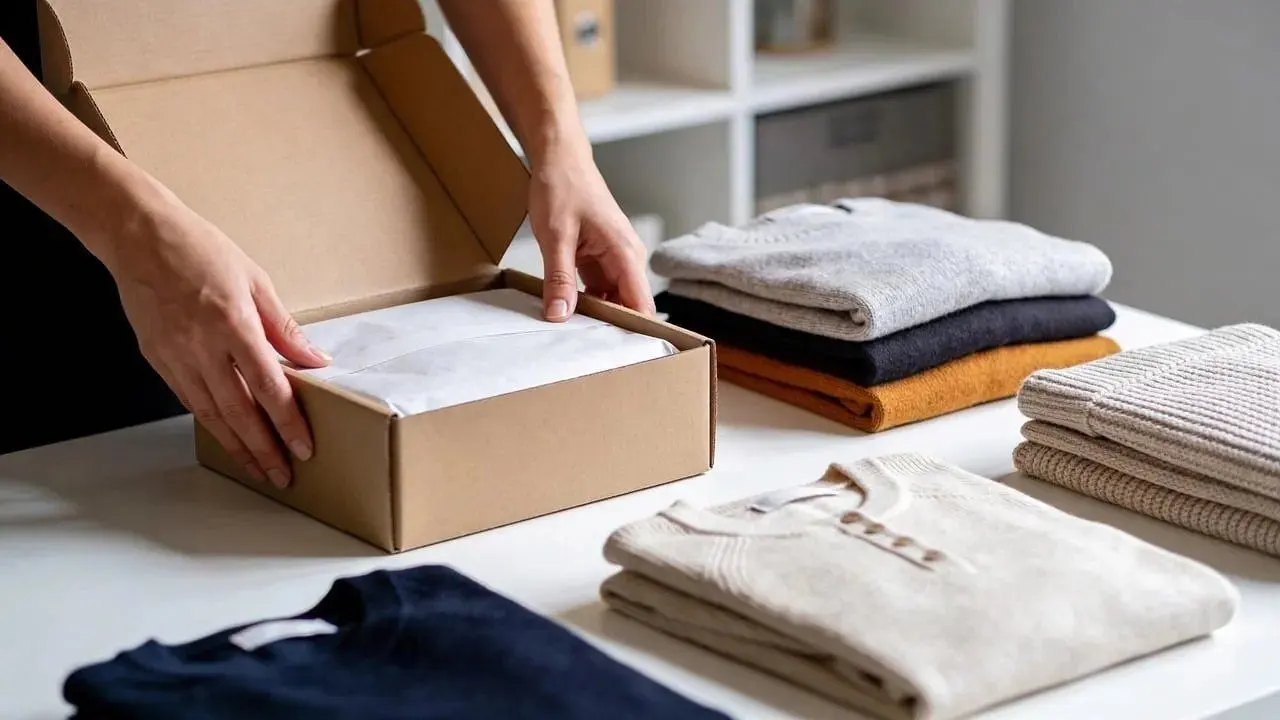
Your shop still earns its keep. A 2024 ESW survey, quoted by U.S. Bank, found that 14% of respondents buy extra items when they come in to collect an online order. U.S. Bank’s phrasing is that your store is now a piece of the customer journey puzzle, not an endpoint.
Which capabilities should you build first?
PayPal’s list of key components is a useful menu, but a small team should pick from it rather than build everything. These are the pieces worth weighing:
- Inventory that updates in one place. PayPal calls smart inventory the foundation of options like BOPIS, same-day delivery and ship-from-store models.
- A checkout that works everywhere. The same guide mentions mobile wallets, contactless payments and buy now, pay later as ways to remove roadblocks.
- Returns that cross channels. PayPal describes buying online and returning in store, exchanging across locations, or receiving instant store credit.
- Customer details your staff can see. U.S. Bank notes that with a cloud-based POS, all your staff have instant access to the same information, wherever they are.
If you can only afford to fix one thing, fix stock accuracy. Every other promise, from pickup to shipping from the shop, depends on it.
Returns need a clear written rule before you advertise them. Read our guide to omnichannel returns to decide what you can honor in the shop and online.
What other brands offer, as a benchmark
Shopify cites NewStore’s 2023 Omnichannel Leadership Report to show how common each feature is among brands. These are the shares it reports:
- 76% of brands accept contactless payment methods in store.
- 72% offer BORIS (buy online, return in store).
- 54% offer BOPIS (buy online, pick up in store).
- 31% show store inventory online.
- 17% offer virtual appointments.
Read this as a rough guide to what shoppers may expect, not a target. Contactless payment and in-store returns are widespread, while showing store stock online is less common, which could be a way for a small shop to stand out without a big spend.
A budget-friendly order of work
You do not need to launch everything together. Work through the steps in order and stop when the next one costs more than it returns.
- List your channels. Write down every place a customer can find or buy from you today.
- Unify stock. Choose one system as the source of truth for what you hold.
- Add a pickup option. Let online orders be collected in the shop once your stock count is reliable.
- Set a returns rule. Decide where each kind of item can be returned or exchanged.
- Use customer data sparingly. Shopify’s guide says 51% of consumers feel frustrated by irrelevant content and offers, so relevance beats volume (source).
Mistakes that waste a small budget
- Adding channels without connecting them. That is multichannel, and PayPal’s guide says it can leave shoppers with different experiences depending on the channel.
- Treating the shop as an afterthought. Pickup, in-store ordering and staff access to customer history all make the shop part of the same journey.
- Dead ends when an item is out of stock. U.S. Bank suggests offering home delivery or holding the item for later pickup instead.
Frequently asked questions
Do I need my own mobile app?
Show answer
Not necessarily. PayPal lists apps as one example of omnichannel retail, and Shopify’s NewStore data says 33% of brands have one (Shopify). A mobile-friendly site with accurate stock is a lighter place to begin.
How is omnichannel different from selling on several channels?
Show answer
Multichannel is about presence: you list products in several places. Omnichannel is about connection, where stock, pricing, messaging and customer details follow the shopper from one channel to the next.
Is click-and-collect worth offering in a small shop?
Show answer
It can be, because collection brings people through your door. The ESW survey reported by U.S. Bank found that 14% of respondents add purchases at pickup, though your own results will vary.
Where should I begin if I have almost no budget?
Show answer
Begin with the free work: audit your channels, tidy your product listings and decide on a clear returns rule. Spend money only once you know which gap loses you the most sales.